The cyber crime occurs in social media that the children and youth negotiate with other people that can give money and their wants. In high school at the age of 13 to 17 were many of them who are able to watch a pornography movies and violence in many websites through cellphones or computer which is not right to see. They might also apply them in real life. And it is the beginning that the youth at adolescent period were force to do things he/she doesn’t understand at corrected and many victims of cyber are girls. Most of that they make it habit and they should think nothing to be lost at all. They think it’s hard to get away to the things they are in. many people won’t understand you. They will be judgmental to you. If you know what are you doing it was a crime and then you neighbor began to wonder because of the things he/she you’ve got. You are very young to have such a things and that’s not appropriate for you. You only have to be kind child/youth to your parents they know better than you and they will provide your needs in their capacity. Let your parents know what is happening with you. Sometimes other parents use their child in illegal doing, it should not be happening to you
Thursday, August 10, 2017
John Cloyd Mernilo
Nowadays the world has grown to high technology many gadgets were invented. Most of the children in the world are prone to having that device such as computer, phones and television. Those devices has many affect to our children (it was minor but major if over used) in physical and mental health.
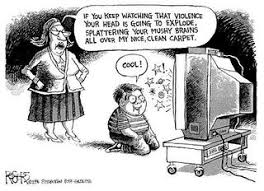 For instance, the children became disobedient. They became addicted to the use of these gadgets that even their study was left behind. We cannot blame them, simple because of this high technology. Imagine a two old child know to use phones and turn on television then change the channel of it, this child is already in high technology user. Improper use of internet and time spent aside from their money for nonsense. The youth probable open a malicious websites and trough video call or Facebook etc.
 Parent should teach their child/children to manage their selves. Create and make a limit they use of internet and learned responsible citizenship trough media. If a child can see two person may be their parents having sex or having seen through watching videos not appropriate for children will they may do it themselves feeling that it’s OK to do it. The effect for the child is, it is OK?. For watching pornography is to apply it so a rape may happen. When there is violence in the family that the children can see is the quarreling, shouting at each instead of loving each other will led to stay out of the house and look for friends or Barkadas, good if the peers are good and bad if they are bad influence.

The cyber crime occurs in social media that the children and youth negotiate with other people that can give money and their wants. In high school at the age of 13 to 17 were many of them who are able to watch a pornography movies and violence in many websites through cellphones or computer which is not right to see. They might also apply them in real life. And it is the beginning that the youth at adolescent period were force to do things he/she doesn’t understand at corrected and many victims of cyber are girls. Most of that they make it habit and they should think nothing to be lost at all. They think it’s hard to get away to the things they are in. many people won’t understand you. They will be judgmental to you. If you know what are you doing it was a crime and then you neighbor began to wonder because of the things he/she you’ve got. You are very young to have such a things and that’s not appropriate for you. You only have to be kind child/youth to your parents they know better than you and they will provide your needs in their capacity. Let your parents know what is happening with you. Sometimes other parents use their child in illegal doing, it should not be happening to you
The cyber crime occurs in social media that the children and youth negotiate with other people that can give money and their wants. In high school at the age of 13 to 17 were many of them who are able to watch a pornography movies and violence in many websites through cellphones or computer which is not right to see. They might also apply them in real life. And it is the beginning that the youth at adolescent period were force to do things he/she doesn’t understand at corrected and many victims of cyber are girls. Most of that they make it habit and they should think nothing to be lost at all. They think it’s hard to get away to the things they are in. many people won’t understand you. They will be judgmental to you. If you know what are you doing it was a crime and then you neighbor began to wonder because of the things he/she you’ve got. You are very young to have such a things and that’s not appropriate for you. You only have to be kind child/youth to your parents they know better than you and they will provide your needs in their capacity. Let your parents know what is happening with you. Sometimes other parents use their child in illegal doing, it should not be happening to you

John Rafael Salava
Sex and Violence
Sexual violence means that someone forces or manipulates someone else into unwanted sexual activity without their consent. Reasons someone might not consent include fear, age, illness, disability, and/or influence of alcohol or other drugs. Anyone can experience sexual violence including: children, teens, adults, and elders. Those who sexually abuse can be acquaintances, family members, trusted individuals or strangers.

Grace Ann Pacilan
SEX AND VIOLENCE IN MEDIA
Sex and Violence in Media are now one of the main occurrences man are facing. Due to curiosity man are bound to be aggressive and are ready to explore things. They are ought to be influenced, capturing new perceptions, personalities, behaviors and are readily distorted. Media exposure can be a manipulative activity for viewers. Evidence now points out that many of the widely held beliefs in this area have been the cause of severe problems, both for youth and society.
In today's society, sex and violence is practically in every movie you see. Most box office hits are filled with a variety of violence, like the Matrix or a variety of sexual content, like American Pie. The violence and sex content in these movies make it appealing to viewers, especially young audiences. But, the effects of watching these movies could be damaging, especially if the child is not being supervised while watching these movies. Sigmund Freud had his views on sex and violence. Freud believed sex was something a human needed to survive. He believed it was the instinct of the human that motivates him or her to seek food and water and the instinct of the species to motivate him or her to have sex. Freud thought sex was a very important need because he felt humans were very social creatures (www.ship.edu/~cgboeree/freud.html). I think Freud would have thought watching sex on television would motivate humans to do the same and fulfill our desires. Freud was such a strong believer on the sexual tendencies, for example the Oedipus complex. The Oedipus complex was described as the son wanting to kill his father and marry his mother. He also was a strong believer of how humans use the defense mechanism of denial to avoid what humans truly want and need. Therefore, through watching movies with sexual content, it might seem like it is okay to act out the desires that we want, because we see it in the media.
IN WHAT MEDIA DO SEX AND VIOLENCE PRESENT?
Nowadays sex and violence. occurs at many different types of media such as;
Print medias, like komiks, magazines and others that portrays inappropriate pictures that shows the interest of sex and violence. There are some articles that are not age appropriate.


In such medias like films where as movies, indie films, even a short timed films indicates sex and violence are presently valuable and can be viewed by majority and are classified harmful.


What could possibly be the huge effect of Sex and Violence in Media?
Sex and Violence in Media, triggers the viewers mind. and are dangerously going to model it. A pastor shares a story about a man who is titled as the most serial killer and rapist. According to Him `` This man was interviewed and is questioned like this. ``What is your best reason why you always into rape and raping them you kill them?`` The suspect answered, ``For it was on my behavior and is now unstoppable.`` Also according to further more investigation it was noticed that it all started while he was just on a young age. Where he always goes to stores and buys pornographic magazines till time comes his will was not satisfied by just seeing it he becomes eager yo experience it .` Then that`s the main reason he always tends to rape and kill. As a pastor says, ``Eyes feed the heart. Out of the abundance of the heart speaks and acts.`` You see it all started with the eye. that views each and any of these sexual and violence porn.

According to researches a huge ratings of sex and violence in media are now malignant and is continues on growing.

Also according to a survey it was proven that sex and violence in the media is a huge problem as of today.

What solutions we could give as a further solution to this dilemma?
Parents, as one of our obligation, watch over your children. Make sure you know what they are viewing, guide them and always remind them things that is right and keep them away from harm.

Being more aware of what might come in harm us. Is the best resolution that makes us away from dangerous and unmanly behaviors.

Arjay Caracas
SEX AND VIOLENCE IN PRINT MEDIA
Sex and violence in print media are enormous in quantity, nowadays sex in print media are just source of entertainment for the readers. But even if it just serves as entertainment to them it can/might destroy the innocent minds of the youth readers. Some articles are used for violence in order to provoke one person or to attain their goal in forms of print media.
EXAMPLES OF IT:
· Magazines- is a publication, usually a periodical publication, which is printed or electronically published (sometimes referred to as an online magazine). Magazines are generally published on a regular schedule and contain a variety of content. They are generally financed by advertising, by a purchase price, by prepaid subscriptions, or a combination of the three.
· Newspaper- is a serial publication containing news about current events, other informative articles about politics, sports, arts, and so on, and advertising.

CONCLUSION
This kind of abuse in form of print media may cause terrible effect to the current readers.It can affect people through mentally and also physically.
Neil Ariz Reyes
Sex and Violence in Movies


Movies-a recording of moving images that tells a story and that people watch on a screen or television. It could be mainstream, short film, indie and documentary.
WHO HAVE THE CHANCES TO BE MANIFESTATED BY THIS?
Everyone of us have the capaccity to watch movies, it is age limit. But there are movies have different themes, so there are movies who aims specific ages. Why there are that are not available to any viewers? Because this might harm young children`s minds who are innocent, and this is where SEX AND VIOLENCE IN MOVIES come in connection.
WHAT DOES IT CAUSE?
Most of the movies as of today contains murders and sexual theme. This kind of themes should not be viewed by people at a young age for their knowledge about what is right and what is wrong is not fully developed. For there is the huge chance that they will model what they have seen for they thought it was right. Most children are involved to this problem.
How can we avoid this?
To all of the parents, they should be there to guide their children. Lets be aware of what our children are watching so they can be away to this kind of movies and this kind movies should not be viewed by them.
Ronan Galano

Television watching is a favorite activity for kids; however, T.V. alone is estimated to be responsible for motivating at least10 percent of youth violence. Although some stations contain ratings for shows, it is important to keep in mind they are not always age appropriate.
Dangers of exposure to the sex and violence in television:

- Cause aggressive or anti-social behavior.
- Create a false sense of reality.
- Encourage irresponsible sexual activity.
- Cause a child to perceive the world as more dangerous and have a darker view about the world.
- Desensitize and cause a lack of empathy for human suffering.
- Distort expectations of conflict resolution, race and male-female relationships.
Protect the children from the negative effects of television. Take the childrens at the park or playground. For them to have fun.

Denise Kristina Tesalona
S3x and Violence in the New Media

S3x and violence are common occurrences in the media and with the available exposure kids have to media, their behavior, perceptions and personalities can be easily influenced and distorted.
What media is reaching my children?
In today’s society, the average child watches four hours of television every day; listens to music between four and five hours; and plays video games up to seven hours a week.

Television
Watching is a favorite activity for kids; however, T.V. alone is estimated to be responsible for motivating at least10 percent of youth violence. Although some stations contain ratings for shows, it is important to keep in mind they are not always age appropriate.


Music today sometimes contains very explicit lyrics that often reference s3x, drugs, alcohol, and violence. Heavy metal and rap music are known to glorify violence and some artists have been charged with violent crimes in real life, which can distort children’s views of the real consequences that follow certain behavior
What are the dangers of exposure to s3x and violence in the media??
Younger children tend to model behavior they see and don’t always understand the difference between reality and entertainment; therefore, exposure to s3x and violence through the media’s influence can:
· Cause aggressive or anti-social behavior. Media can promote aggressive behavior and can also influence children to believe violence is a good solution to solve problems.
· Create a false sense of reality. Young children can’t always discriminate between real life situations and behaviors and surreal television examples.
· Encourage irresponsible sexual activity. Kids exposed to s3x on TV are almost twice as likely to initiate sexual intercourse.
· Cause a child to perceive the world as more dangerous and have a darker view about the world.
· Desensitize and cause a lack of empathy for human suffering.
· Distort expectations of conflict resolution, race and male-female relationships.
Sex is the interaction of the sex organs between the two opposite sexes. And the violence in media is simply, the violence in the media. It doesn't happen physicaly but by means of the media. Sex and violence in media is something that should be avoided by children due to its....
Wednesday, August 9, 2017
Reynard Loyola
The Effects of Violence and Sex in Media to Children
Most people enjoy watching TV and doing stuff on the internet. We're on the 21st century and a lot of cool stuff to see, whether its on the internet, TV, mobile phones, and anything through media. But we never realize the negative effects of it to children.
Anything that children see or hear through media affect them in different ways. Media literate parents should limit their kids not older than 13 of violent videos and movies. Parents should not even let their kids watch sex movies. The media is so advance that inappropriate videos and movies are legal which is very hard for parents since millennial today are so updated to gadgets and news.

Children accessible to gadgets and internet tend to be curious about stuff. One day you'll just realize what your kid already knows. I'm not saying only children are prone to violence and sex in media, its just that this habits and absurd characters starts when we are at a young age. So, if a child has access to all this stuff, who knows how she/he will react to this informations as he/she grows up.

At a young age children begin to play video games they have not quite developed the ability to distinguish between what is reality and what its not. This can cause young children to act upon the violence they have viewed on television, video games and such, not knowing that what they are doing is wrong or inappropriate. Children tend to be imaginary and often act out what they see and hear on TV or in the internet.

The fact of the matter is that parents should monitor and be more attentive to their children. In the act of a busy life we all tend to forget the real life issues. Parents need to pay more attention to their children’s lives and not sit them in front of the television, weather it is for movies, video games, etc. In my opinion in this day and age most parents get too wrapped up in their own lives to be concerned about what their children are doing. Parents should be spending more time with their kids, visiting places, having quality time with them, thus limiting the time they had been spending on media. With the child knowing he/she is loved, they'll understand the true meaning of happiness and will eventually shun out the limited time they get from media. Raising a child is hard enough in this day and age but you add all the outside media violence and it makes it ten times harder to steer your child in the right direction. Does that really mean violent media causes children to be violent? I don’t believe so, these children get bored and should be limited to the types of media entertainment they are exposed to. Sometimes all a parent should do is to create some time for their kids so that they will not rely on the media to fill up their needs, desires and wants. All we can do as parents is pay attention to our children and stay involved in their lives before it is too late.
Mark Kien Dehan
The Influence of Media Violence on Youth
Summary
Research on violent television and films, video games, and music reveals unequivocal evidence that media violence increases the likelihood of aggressive and violent behavior in both immediate and long-term contexts. The effects appear larger for milder than for more severe forms of aggression, but the effects on severe forms of violence are also substantial when compared with effects of other violence risk factors or medical effects deemed important by the medical community . The research base is large; diverse in methods, samples, and media genres; and consistent in overall findings. The evidence is clearest within the most extensively researched domain, television and film violence. The growing body of video-game research yields essentially the same conclusions.
Short-term exposure increases the likelihood of physically and verbally aggressive behavior, aggressive thoughts, and aggressive emotions. Recent large-scale longitudinal studies provide converging evidence linking frequent exposure to violent media in childhood with aggression later in life, including physical assaults and spouse abuse. Because extremely violent criminal behaviors are rare, new longitudinal studies with larger samples are needed to estimate accurately how much habitual childhood exposure to media violence increases the risk for extreme violence.
Well-supported theory delineates why and when exposure to media violence increases aggression and violence. Media violence produces short-term increases by priming existing aggressive scripts and cognitions, increasing physiological arousal, and triggering an automatic tendency to imitate observed behaviors. Media violence produces long-term effects via several types of learning processes leading to the acquisition of lasting aggressive scripts, interpretational schemas, and aggression-supporting beliefs about social behavior, and by reducing individuals' normal negative emotional responses to violence .
Certain characteristics of viewers , social environments , and media content can influence the degree to which media violence affects aggression, but there are some inconsistencies in research results. This research also suggests some avenues for preventive intervention . However, extant research on moderators suggests that no one is wholly immune to the effects of media violence.
Recent surveys reveal an extensive presence of violence in modern media. Furthermore, many children and youth spend an inordinate amount of time consuming violent media. Although it is clear that reducing exposure to media violence will reduce aggression and violence, it is less clear what sorts of interventions will produce a reduction in exposure. The sparse research literature suggests that counter attitudinal and parental-mediation interventions are likely to yield beneficial effects, but that media literacy interventions by themselves are unsuccessful.
Though the scientific debate over whether media violence increases aggression and violence is essentially over, several critical tasks remain. Additional laboratory and field studies are needed for a better understanding of underlying psychological processes, which eventually should lead to more effective interventions. Large-scale longitudinal studies would help specify the magnitude of media-violence effects on the most severe types of violence. Meeting the larger societal challenge of providing children and youth with a much healthier media diet may prove to be more difficult and costly, especially if the scientific, news, public policy, and entertainment communities fail to educate the general public about the real risks of media-violence exposure to children and youth.
Adolescent sexuality and the media
INTRODUCTION
We reviewed the current scientific literature on adolescents and sex in the media—using searches of MEDLINE—and the psychological and media literature. The emphasis was on rigorous research and included accessing the expertise of health care professionals and other knowledgeable sources on the media. The available research does not adequately address the effects of exposure to sexual content in the media on adolescent beliefs, knowledge, intentions, and behaviors. Similarly, research on sexual content of the Internet, in video games or other handheld devices, or in the multitude of other electronic media has been scant.
SEXUALITY IN THE MEDIA
Although sexual content in the media can affect any age group, adolescents may be particularly vulnerable. Adolescents may be exposed to sexual content in the media during a developmental period when gender roles, sexual attitudes, and sexual behaviors are being shaped.1 This group may be particularly at risk because the cognitive skills that allow them to critically analyze messages from the media and to make decisions based on possible future outcomes are not fully developed.
Analyses of broadcast media content indicate that, on average, teenaged viewers see 143 incidents of sexual behavior on network television at prime time each week, with portrayals of three to four times as many sexual activities occurring between unmarried partners as between spouses. As much as 80% of all movies shown on network or cable television stations have sexual content. An analysis of music videos indicates that 60% portray sexual feelings and impulses, and a substantial minority display provocative clothing and sexually suggestive body movements. Analyses of media content also show that sexual messages on television are almost universally presented in a positive light, with little discussion of the potential risks of unprotected sexual intercourse and few portrayals of adverse consequences.
Survey data show that adolescents' access to and use of media as sources of information are substantial. In a national study,8 high school students reported an average of 2.9 television sets, and 1.3 of 10 (13%) of American children reported living in homes with two or more televisions, 97% had videocassette recorders in their homes, 75% had access to cable television, and more than half had a television set in their own rooms.7 Further, more than 80% of adolescents report that their peers find out some or a lot about sex, drugs, and violence from television shows, movies, and other entertainment media.13 About 10% of teens acknowledge that they have learned more about the acquired immunodeficiency syndrome (AIDS) from these media sources than from parents, school personnel, clergy, or friends.
ADOLESCENT SEXUALITY AND CONSEQUENCES
Policy makers and health professionals have long been concerned about premarital sexual activity in the teenaged population and the risks of pregnancy and sexually transmitted diseases, including infection with the human immunodeficiency virus (HIV).14,15 Nationwide, nearly half of all high school students have had sexual intercourse,12 with African Americans significantly more likely to be sexually experienced (72%) than Hispanics (52%) or whites (47%).16 Research suggests that even among teenagers who have not experienced vaginal intercourse, substantial numbers engage in other intimate sexual behaviors that carry health risks.
Among adolescent girls in the United States aged between 15 and 17 years, 75 per 1,000 become pregnant each year, a rate two to seven times higher than rates in other industrialized nations. Those adolescents (19% of the adolescent population) who report four or more lifetime sexual partners are at greater risk for contracting sexually transmitted diseases, including HIV infection. Overall, 25% of sexually active teenagers and 13% of all adolescents between the ages of 13 and 19 become infected with sexually transmitted diseases each year, representing 3 million cases or about 25% of all new cases reported annually.
WHAT WE KNOW ABOUT SEXUAL CONTENT IN THE MEDIA
What we know about the potential effects of televised sexual content on adolescents is based largely on content analyses of media that quantify levels of sexual material and track trends from year to year. This work includes studies of network and cable programming, rock music and music videos, and R- and X-rated films available on videocassette.
In addition to content analyses, correlational studies have linked sociodemographic factors to adolescents' viewing preferences and to their understanding and interpretation of sexual material in the media. Findings indicate that adolescent girls choose network television programs with sexual content more often than do adolescent boys and spend more time watching it, often in the company of parents.5 Older adolescent boys, however, are more oriented to the hardcore sexual content found in explicit music lyrics and X-rated films.3 They are also more drawn to new media choices like handheld devices, the Internet, and computer games.22 Adolescents of both sexes who watch and listen to a lot of media are more likely to accept stereotypes of sex roles on television as realistic than are less frequent viewers.
Other research indicates that ethnicity plays an important role in media viewing choices. Compared with their white peers, African Americans spend more time watching television, are more likely to choose fictional programming with African American characters, and are more likely to perceive those characters as realistic. African American and white youths also find different features of video portrayals salient and disagree on story elements. Higher rates of viewing by adolescent African American adolescents, especially of soap operas, make them more likely to see sexual content. Comparable data are not available on Asian, Latino, or other ethnic subgroups.
Age or stage of development also influences comprehension and interpretation of sexual content. In a study of sexual innuendo on television, 12-year-old youths were less likely to understand suggestive material than 14- and 16-year-olds. Similarly, in a qualitative study of adolescent girls aged 11 to 15, those who were at an earlier stage of physiologic development were less interested in sex portrayed in the media whereas more mature young women were intrigued and more actively sought out sexual content in the media as a means of “learning the rules, rituals, and skills” of romance and relationships. Specifically, they reported that the media provided models for achieving the “right look” to become popular and attract boys, portrayed teen characters with problems similar to their own, showed how they solved those problems, and gave examples of how to behave in sexual situations. We could not find comparable studies of developmental influences on boys' understanding and interpretation of sexual content.
A few studies have assessed the associations between the degree and nature of adolescent exposure to sexual content and their sexual attitudes and behaviors. A recent study of African American girls aged 14 to 18 years found that teens with either multiple sexual partners or a history of sexually transmitted infections reported a higher rate of viewing television shows that depicted women as sexual objects or prizes. A few experimental studies have shown that viewing sexual content can have moderate effects on sexual knowledge or attitudes, but it is unclear whether these effects are sustained over time or result in changes in sexual intentions or behavior. Brown and Newcomer found that television viewing patterns differed by the sexual status of the adolescent , with sexually active teens viewing more television with a high level of sexual content. Determining whether exposure to sexual content encouraged sexual experimentation, or vice versa, was not possible. This is a key unanswered question because of the lack of longitudinal research in this field.
Many theories have been advanced to explain the effects of media on behavior. They are all based on the fundamental notion that greater exposure to the media leads to the adoption of the values, beliefs, and behaviors that are portrayed, particularly when they are shown to be reinforced or are unaccompanied by adverse consequences. Research on exposure to violent content in the media provides some support for these views. Sexual activity, however, may not be learned by observation and modeling in the same way as aggression or violence. Other promising work appears in research on televised alcohol advertising and adolescent drinking. Findings suggest that simple exposure to alcohol advertisements does not affect alcohol use. Rather, the effects of alcohol advertisements depend on the extent to which young people like and attend to them. Music and humor are key elements in determining liking and attention. Importantly, this research used statistical modeling that showed that attention to alcohol advertising increases adolescent drinking, whereas drinking does not influence attention to alcohol advertising.
Subscribe to:
Posts (Atom)
John Cloyd Mernilo
Nowadays the world has grown to high technology many gadgets were invented. Most of the children in the world are prone to having that devic...
-
 Television watching is a favorite activity for kids; however, T.V. alone is estimated to be responsible for motivating at least10 perc...
 -
Nowadays the world has grown to high technology many gadgets were invented. Most of the children in the world are prone to having that devic...
-
 The Effects of Violence and Sex in Media to Children Most people enjoy watching TV and doing stuff on the internet. We're on the 21s...
